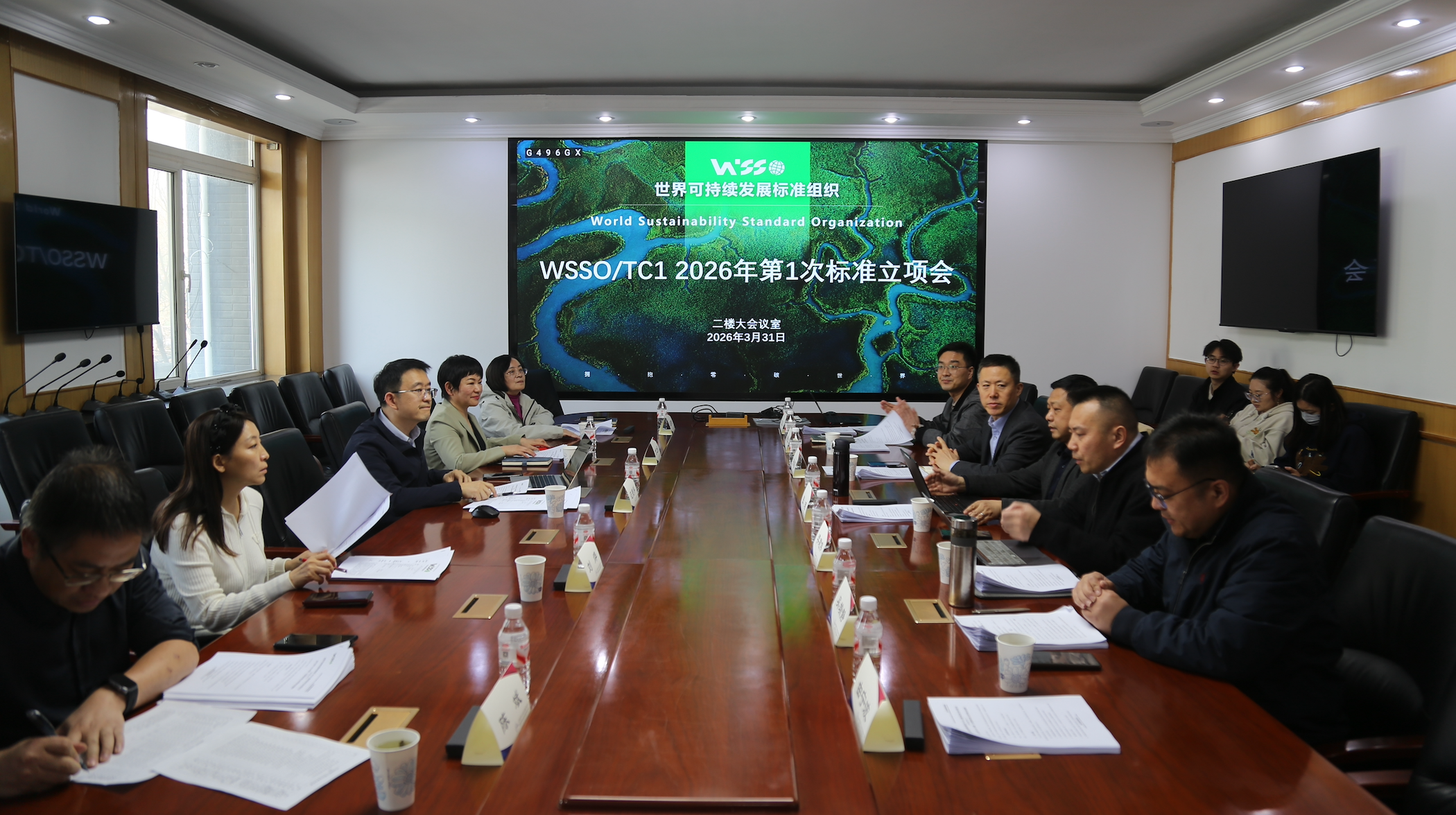
BEIJING, April 18, 2025 – The World Sustainability Standard Organization (WSSO), in close collaboration with the Building Materials Industry Technology Intelligence Research Institute, successfully concluded its Second International Standard Project Review Meeting in Beijing. The event gathered a diverse group of experts from government agencies, academic institutions, and industrial sectors, all united in their commitment to advancing global sustainability standardization and driving the global low-carbon transition.
During the meeting, a series of new international standard proposals were rigorously reviewed, focusing on key strategic areas critical to global sustainable development: industrial green transformation, building energy efficiency enhancement, and new energy equipment standardization. These proposals fully integrate advanced low-carbon technologies with strong global applicability, aiming to provide scalable, practical solutions that support international industrial transition and help industries worldwide achieve their sustainability goals.
A panel of senior industry experts was assembled to conduct a comprehensive and rigorous evaluation of each proposal. The evaluation focused on three core dimensions: scientific soundness, technical feasibility, and international applicability, ensuring that all standards developed would be practical, authoritative, and aligned with global sustainability trends. The review process also emphasized the vital importance of transforming technological innovation into internationally recognized standards— a key step to enhancing global industrial competitiveness and fostering inclusive, sustainable development across regions.
The Second International Standard Project Review Meeting outlined three clear strategic priorities for the future development of sustainability standards, laying a solid foundation for global green governance:
• System Integration: Construct a comprehensive, full-chain standard system that supports the coordinated development of industries and the smooth operation of cross-regional carbon markets, eliminating standards fragmentation and promoting unified global sustainability practices.
• Innovation-Driven Development: Promote the in-depth integration of digital technologies (such as IoT, big data) with green and low-carbon practices, leveraging technological innovation to optimize sustainability standards and enhance their practicality and efficiency.
• Global Collaboration: Strengthen international cooperation and standard mutual recognition among countries and regions, ensuring that WSSO standards are robust, practical, and globally aligned to meet the diverse needs of different markets and industries.
The successful conclusion of the Second International Standard Project Review Meeting marks steady progress in advancing high-quality international sustainability standards. It further strengthens WSSO’s core role in global sustainability governance, solidifying its position as a key driver of global low-carbon development. Moving forward, WSSO will continue to align technological innovation with international standardization, providing strong standard support for the global transition toward a low-carbon, sustainable future and contributing to the achievement of global sustainability goals.